Latest News
Hey!Spread Automates Publishing Videos To Multiple Sites
Jul 4th, 2008 | By James Lewin | Category: Podcast DistributionHey!Spread has updated its video distribution service with updated stats, a “YouClone” feature and support for publishing your videos to nearly 20 networks, including YouTube, Facebook, Blip, Dailymotion, Revver, Google, Vimeo, Metacafe, Viddler, Veoh, Yahoo and others.
You can also automatically overlay a watermark image on your video to give it a consistent identify across distribution networks.
The YouClone feature lets you automatically export your YouTube videos to any other supported platform in one shot.
Here’s a video that demonstrates how it works.
The service is pay as you go. Details at the site.
Podcasting Boost Radio Audiences
Jul 4th, 2008 | By James Lewin | Category: Digital Music, General, Podcasting Research, Podcasting Statistics  People are leaving traditional radio behind for on Internet radio and podcasting, but a new UK study suggests that radio stations that embrace podcasting can actually grow their audiences.
Research firm Ipsos Mori has found that 10% of those surveyed said they listened to less live radio after starting to download podcasts. However, 15% said they listened to more live radio since they began downloading podcasts, and 39% said they were listening to radio programs they did not listen to previously.
Other highlights of the research:
- Podcast listening occurs throughout the day, with an evening peak when 44% of podcast users click on the play button. A total of 83% of podcast users now listen to content that is more than a week old.
- 6 million people in the UK have now downloaded a podcast – up from 4.3 million in November 2007. And 3.7 million now say they listen to a podcast each week, up from 1.87 million in last year’s survey.
- The average podcast user subscribes to 3.6 podcasts and spends just over an hour a week listening to them. Comedy and music continue to be the two favorite genres.
- iTunes remains the preferred software for almost three-quarters of users who subscribe to podcasts, while a fifth simply download directly from the website via their browser.
- 79% of people listen to podcasts on their home computer and 66% listen via a portable audio/mp3 player.
- 53% said they would be interested in downloading podcasts containing advertising if they were free.
- Only 31% responded positively to the idea of podcasts without adverts that had to be paid for.
Image: Thomas Hawk
Internet Advertising Spending Will Top $106 Billion Within 3 Years
Jul 4th, 2008 | By James Lewin | Category: GeneralSpending on Internet advertising will grow from $65.2 billion in 2008 to $106.6 billion worldwide in 2011, about 15-20% per year, according to research firm IDC.
“Compared to more mature types of advertising, Internet advertising is growing at a phenomenal rate,” said John Gantz, chief research officer at IDC. “But Internet advertising is still relatively new and growing from a much smaller base. By the end of the forecast period, spending for Internet advertising will trail direct mail – the third largest form of advertising – by more than $30 billion, while spending on TV and print ads will each be nearly twice as great as for online ads.”
Other highlights:
- Keyword ads will remain the dominant type of Internet advertising throughout the forecast period, capturing more than a third of annual online ad spending worldwide.
- Display ads will be the next largest type of Internet advertising, capturing more than 20% of worldwide spending annually through 2011, followed by classified ads with nearly 19% of all online ad spending per year.
- Spending in both categories will be pressured by rich media ads, which are expected to grow at a compound annual growth rate (CAGR) of more than 50% during the 2007-2011 forecast period.
“Marketers already recognize that online advertising must be incorporated into any comprehensive ad strategy. This will continue to drive growth in online ad spending well beyond the forecast period,” said Karsten Weide, program director, Digital Media and Entertainment.
Read more »
Get Free Music And Preview The Free Music Archive
Jul 3rd, 2008 | By James Lewin | Category: Digital Music, Featured Story, Podcast-Legal Music 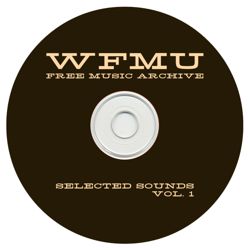 The Free Music Archive is a new online digital library of music that will allow music fans, webcasters and podcasters to listen, download, and stream for free, with no restrictions, registration or fees. And it will all be legal.
The site’s still a work in progress, but you can download a free selection of music from the archive now:
WFMU presents Selected Sounds from the Free Music Archive vol. 1. This compilation previews 21 of the thousands of tracks that’ll be freely available under Creative Commons licenses when the fully interactive Free Music Archive website launches this November. We’re working with a group of fellow curators to fill the library with great music, and this sampler represents a piece of what WFMU brings to the table.
Download (.zip)
The Real Reason YouTube Can’t Make Money: Teleporting Fat Guy
Jul 3rd, 2008 | By James Lewin | Category: General, Internet TV, VideoGoogle has a problem.
It’s got the biggest video destination on the Internet – YouTube – but it’s struggling to find a way to make money with the site.
Meanwhile, Hulu is “kicking YouTube’s ass”, and building a business on long tail video that’s advertiser-friendly.
Google’s problem, in a nutshell, is the fact that most of the content on the site is either content ripped from copyrighted sources, or it’s stuff like Teleporting Fat Guy:
Teleporting Fat Guy is what a successful YouTube video looks like. It’s original, it’s viral and it racks up hundreds of thousands of views a day.
But it’s also content that most advertiser don’t have any idea what to do with.
Read more »
Creating Businesses Using Creative Commons Media
Jul 3rd, 2008 | By James Lewin | Category: General, Podcasting Law
This is one of a series of videos by Frances Pinter and David Percy that look at building businesses based on Creative Commons licenses.
It takes a look at Magnatune, a digital music store built on CC licenses, and the company’s founder, John Buckman.
Creative Commons licenses are a set of free tools designed to let you mark creative works with the freedoms you want it to carry. CC licenses have been key to the growth of music podcasts.
You can use CC to change your copyright terms from “All Rights Reserved” to “Some Rights Reserved.” That way, people can share them on the Internet, giving your work free distribution and promotion, while you can still retain some control over how they are used.
US Broadband Penetration Jumps 17%, But Digital Divide Growing
Jul 3rd, 2008 | By James Lewin | Category: General, Podcasting Research, Podcasting Statistics55% of all adult Americans now have a high-speed internet connection at home, according to a May 2008 survey conducted by the Pew Internet & American Life Project:
- The percentage of Americans with broadband at home has grown from 47% in early 2007 and 42% in early 2005.
- Among individuals who use the internet at home, 79% now have a high-speed connection while 15% use dialup.
While 4 out or 5 home Internet users now connect with broadband, several groups are getting left behind:
- Among adults who live in households whose annual incomes are less than $20,000 annually, home broadband adoption stood at 25% in early 2008, compared with 28% in 2007.
- Among African Americans, home broadband adoption stood at 43% in May 2008 compared with 40% in early 2007.
“The flat growth in home high-speed adoption for low-income Americans suggests that tightening household budgets may be affecting people’s choice of connection speed at home,” said John B. Horrigan, Associate Director of Research at the Pew Internet & American Life project and author of the report. “Broadband is more costly on a monthly basis than dial-up, and some lower income Americans may be unwilling to take on another expense.”
Read more »
Viacom’s Billion-Dollar YouTube Lawsuit Just Turned Ugly
Jul 3rd, 2008 | By James Lewin | Category: Streaming Video, Video, Video Podcasts, Vlogs  Viacom’s billion dollar lawsuit against Google is getting ugly. The federal court hearing the case has ordered (pdf) Google to provide Viacom with “all data from the Logging database concerning each time a YouTube video has been viewed on the YouTube website or through embedding on a third-party website”.
The ruling brings a new twist to the case, and raises a lot of privacy issues.
It’s relevant to the case whether or not Google has built a business based primarily on copyright infringement. It’s not relevant to the case whether or not you have an unusual interest in philology.
At the core of Viacom’s complaint is Viacom’s belief that YouTube users spend most of their time watching pirated video:
“YouTube is a significant, for-profit organization that has built a lucrative business out of exploiting the devotion of fans to others’ creative works in order to enrich itself and its corporate parent Google. Their business model, which is based on building traffic and selling advertising off of unlicensed content, is clearly illegal and is in obvious conflict with copyright laws. In fact, YouTube’s strategy has been to avoid taking proactive steps to curtail the infringement on its site, thus generating significant traffic and revenues for itself while shifting the entire burden – and high cost – of monitoring YouTube onto the victims of its infringement.”
What people are watching is clearly important to Viacom’s case, but who is watching what isn’t.
The judge should have required Google to provided an anonymized version of the logs, where IP addresses and user information has been stripped out or replaced with anonymous user tokens.
This twist needlessly complicates the case, and is likely to work against Viacom.
Update: Good coverage of this ruling at Threat Level and EFF.
Why The Roku Netflix Player Could Change Internet Television
Jul 2nd, 2008 | By James Lewin | Category: Internet TV, Streaming Video, Video 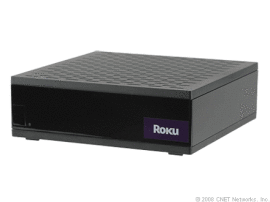 There’s been a lot of discussion today about the Roku Netflix Player, focusing on the idea that Roku could its cheap Player to establish a foothold in people’s living rooms, and then add additional services to establish itself as a major Internet television solution.
According to a Forbes report, “Later this year, a simple software update will allow the box to stream content from other “big name” providers.”
If Roku can work out deals with streaming video providers Hulu and YouTube, it could leapfrog Apple TV to become the leading Internet TV solution.
The Roku Player Is An Open Platform
Getting more content on the device is interesting, but what gets me excited is something nobody seems to be talking about yet: Roku’s open source code.
Roku has released a variety of Netflix player components as open source, GPL’d code. That means that the Roku Player could quickly become the open platform that many wanted Apple TV to be.
We’ve seen the potential of open source projects like WordPress & Firefox how minor software apps can become leaders through successful community development. We’ve also seen how developers are itching to hack on Apple TV, but are limited because of Apple’s decision to treat the box as a toaster, instead of a platform.
An open source Internet television platform could lead to an explosion of development, and could force others, like Apple, to turn their “toaster” style Internet TV appliances into platforms for development, too.
Microsoft Exploring Using Zunes In Education
Jul 2nd, 2008 | By James Lewin | Category: iPods & Portable Media Players, Video PodcastsEarlier today, we highlighted the expansion of Apple’s iTunes U into K-12 education. Now it looks like Microsoft wants to get in on the educational portable media player market, too.
Microsoft is working with Fort Sumner High School in New Mexico and South Valley Junior High in Liberty, Missouri to see how students use audio and video podcasts created by or recommended by teachers and fellow students.
Students were encourage to use the devices at school, during travel time and school trips. Microsoft donate the Zunes to the schools, hoping to get data on how the devices can be used in the classroom.
While I’m a big supporter of podcasts in education, I’m skeptical about schools purchasing portable media players for use in the classroom. Portable media player technology changes so quickly that devices are rapidly obsolete, making it difficult to justify the hard costs and support costs for these devices.
