Latest News
Microsoft CEO Ballmer: Print, Traditional TV Are Dead
Jun 6th, 2008 | By James Lewin | Category: General  In a wide-ranging interview with the Washington Post, Microsoft CEO Steve Ballmer offers his views on upcoming changes in technology and media.
His outlook for the future of traditional media is bleak:
In the next 10 years, the whole world of media, communications and advertising are going to be turned upside down — my opinion.
Here are the premises I have. Number one, there will be no media consumption left in 10 years that is not delivered over an IP network. There will be no newspapers, no magazines that are delivered in paper form. Everything gets delivered in an electronic form.
If we want TV to be more interactive, you’ll deliver it over an IP network.
I mean, it’s sort of funny today. My son will stay up all night basically playing Xbox Live with friends that are in various parts of the world, and yet I can’t sit there in front of the TV and have the same kind of a social interaction around my favorite basketball game or golf match. It’s just because one of these things is delivered over an IP network and the other is not. . . .
Also in the world of 10 years from now, there are going to be far more producers of content than exist today. We’ve already started to see that certainly in the online world, but we’ve just scratched the surface.
I always take my favorite case: I grew up in Detroit. I went to a place called Detroit Country Day School. They’ve got a great basketball team. Why can’t I sit in front of my television and watch the Country Day basketball game when I know darn well it’s being video-recorded at all times? It’s there. It’s just not easy to navigate to.
What do you think? Will traditional print & TV be dead in 10 years?
Is Social Media Behind Barack Obama’s Success?
Jun 6th, 2008 | By James Lewin | Category: Commentary, General  Earlier in the week, Elisabeth noted that Barack Obama had wrapped enough delegates to secure the Democratic nomination and that he is actively using podcasting as part of his campaign strategy.
Obama has run a remarkable campaign, and his campaign’s has made innovative use of social media, embracing not just podcasting, but Twitter, Flickr, MySpace, Facebook, YouTube & more.
CIOZone has published an interesting article that takes a look at the IT strategy behind Obama’s campaign:
So what was barackobama.com strategy and how does it differ from Hillary’s Web campaign, especially since Clinton’s Web site eventually duplicated (superficially, at least) virtually every feature that Obama’s offered—many of which are becoming standard equipment on campaign Web sites large and small?
Part of the answer is that the Obama campaign has Chris Hughes, who was one of the three co-founders of Facebook and now runs the campaign’s my.barackobama.com, which itself is a sort of social network. Hughes is not a software developer (it was his Harvard roommate Mark Zuckerberg who wrote the original Facebook code), but he brought an appreciation how to nurture and manage online communities.
“What I do now for the campaign is work on building out the technology to make sure the online community for Barack Obama supporters is as robust as possible and as helpful as possible to the goal of getting people out to vote,” Hughes says.
Hughes was inspired by the idea of what Internet technology could do for Obama, and saw him as the right candidate to take advantage of it.
“Online technology is at a place now that is pretty significantly different from where it was in 2004. I felt that if it was used well, and keyed to campaign goals of fundraising, and bringing people into the campaign, and bringing people to the polls to the vote, that it could make a significant difference.”
“We want to make it super efficient, super streamlined, make it viral,” says Steve Spinner, a Silicon Valley entrepreneur and investor who is a member of Obama’s National Finance Committee and spearheads the campaign’s efforts to work with technology firms. Other campaigns have used the Web “but it’s never been leveraged in this way, through chat groups and community groups, and through Facebook and other social networking sites,” he says.
The Web site allows the campaign to be “owned by the masses,” Spinner says, but he encourages even big donors to complete the transaction through the Web site, saving himself the time it would take to drive to their home or office to collect a check. Although hillaryclinton.com eventually matched most of the features of barackobama.com, the Obama campaign embraced the Web more enthusiastically and fielded many of those capabilities about six months ahead of the competition, Spinner says. “The DNA of everyone working on the Obama campaign is very much a startup mentality, where what matters is how you build it, how fast you roll it out, and how you tie it together.”
Regardless of your political leanings, the whole article is worth a read – it offers a look at the cutting edge of new media in American politics.
Sony Bravia Internet Link Adds YouTube Support
Jun 6th, 2008 | By James Lewin | Category: Internet TV 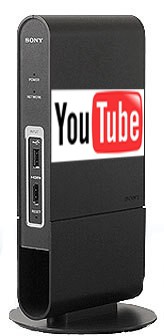 Sony‘s BRAVIA Internet Video Link has taken a leap forward, bringing YouTube support, and laughing babies to Sony’s TVs
The BRAVIA Internet Video Link is a small module that attaches to the back of a selection of the company’s BRAVIA LCD flat-panel television models, giving them support for Internet television. A broadband connection of at least 2.5 Mbps is recommended.
The new content adds to existing channels including Yahoo!, AOL, Sports Illustrated, blip.tv, CondéNet’s Style.com, Men.Style.com, Epicurious and Concierge.com channels, Sony Pictures’ Crackle, The Minisode Network and Inside Sony Pictures channels, FEARnet, Ford Models, SingingFool, and VideoDetective.
Sony’s BRAVIA Internet Video Link module is currently available for about $300.
via engadget
Skype Audio Recorder Updated
Jun 5th, 2008 | By James Lewin | Category: Audio Podcasting, Podcasting SoftwareExtraLabs has updated Skype Recorder, its Windows app that can automatically record Skype calls.
Skype is popular with podcasters because it lets you make free digital calls to anyone with an Internet connection.
The software record into MP3/WMA/OGG/WAV formats, recording conversations in either single or dual audio tracks and even has a built-in FTP-client for uploading files.
The software will start the recording by itself as soon as you start talking on Skype. The conversation over, Skype Recorder will encode the recording to the specified format and will save the ready file on your hard drive.
Skype Recorder costs $13.95, and is compatible with Windows 95, 98, Me, 2000, XP, NT and Vista.
Hulu Puts Search Into Embedded Videos
Jun 5th, 2008 | By James Lewin | Category: General, Internet TV, Streaming Video, Video
Hulu today added a smart feature to its embedded videos: video search:
We’ve just released a new feature that lets you search for videos from Hulu players that are embedded on blogs, social networking sites and similar pages on the Web. Your search results will appear directly in the Hulu video screen, and you don’t have to leave the player to watch the Hulu video of your choice. If your search results include videos that aren’t on Hulu, the link goes directly to that video’s page.
We’ve embedded an example above.
Let’s say you’re not interested in the iPhone Update skit – what you really want to see is Laser Cats!
Just type your search in, and you can watch Laser Cats within the embed.
Some videos will open up in a new window, though. For example, if you search for “Lost season 4″, Hulu will return Lost episodes within the embed, but they’ll open up in a window at the ABC site.
It’s a useful new feature and well implemented.
We’d still like Hulu to fix it’s terrible ad insertion technology, though. All those ads for feminine products have really put me off using the site. They could at least have a thumbs up/thumbs down vote on their ads, so that they wouldn’t keep showing you ads that drive you crazy.
Nine Inch Nails Releases Another Free CD
Jun 5th, 2008 | By James Lewin | Category: General  Trent Reznor today announced another free music download, Lights In The Sky – an EP that features the work of Nine Inch Nails’ touring band:
I am proud to announce the final personnel lineup of nine inch nails for the foreseeable future. We’ve added, we’ve subtracted and we’ve wound up with unquestionably the strongest lineup I’ve EVER had. Joining me onstage will be Robin Finck, Alessandro Cortini, Josh Freese and Justin Meldal-Johnson.
We’ve been working on something really special for these shows and so far I couldn’t be happier with the results. We’ll be revealing some live performances shortly here on nin.com – in the meantime, we’ve posted some photos from rehearsals up on Flickr here.
Meanwhile, I assume some of you may not be entirely familiar with the acts I’ve chosen to join us on various legs of this tour, so we’ve compiled a sampler EP for you. CLICK HERE to download this for free. If you like what you hear, be sure to show up early to the show (and please remember to support them by purchasing their music, if so inclined).
Best,
TR** we have fixed the download to accommodate those of you living in the 80s running Windows! XOXO
The EP contains five DRM-free, fully-tagged MP3 files from a place to bury strangers, does it offend you, yeah?, crystal castles, deerhunter, and nine inch nails. Your download will also include cover art and a pack of digital extras.
Read more »
Strange Podcast Alert: The What You Can Put In Your Luggage When You Fly Podcast
Jun 5th, 2008 | By James Lewin | Category: Audio Podcasting, General, News Podcasts, StrangeA reminder that there’s a podcast for just about anything:
Flyers worried about being able to remember what they can and cannot take in and out of the UK have received aid in the form of a podcast.
Downloadable from the HM Revenue & Customs website, the free audio podcast sees customs expert Mark Fuchter detail which goods carry restrictions when flying back into the UK, as well as which items are completely banned.
Food, plants, wildlife souvenirs, prescription drugs, counterfeit goods and offensive weapons, among other items, are covered in the podcast. It can be downloaded to an mp3 player or listened to from the website.
“If you’re planning a trip abroad, for business or pleasure, take a few minutes to find out what you can and can’t, bring back with you – it could save you a lot of time and money in the long run,” Mr Fuchter remarked.
The Civil Aviation Authority recently warned passengers that taking certain items or improperly packing some goods – such as batteries – could result in a safety risk for those onboard the flight.
Now if we could just convince them to let us use the iPod functions of our iPhones in-flight, we’d be set!
Mindanao Storytelling Podcast Debuts
Jun 5th, 2008 | By Elisabeth Lewin | Category: Audio Podcasting, Citizen Media, PodcastingThe Mindanao News and Information Cooperative Center, a cooperative composed of independent, professional journalists, has teamed with Jean Claire A. Dy, a Media Arts professor at Univ. Phillipines Mindanao, to create a Digital Storytelling Center Mindanao. While the project initially was created for the college students to store their stories, the partnership with the journalists has expanded the initiative to include stories gathered at “digital storytelling workshops” around the region.
Mindanao is the south-easternmost island of the Phillippines, and also the name of a group of islands there.
Dy explains the thinking behind the project:
“…[D]igital storytelling offers many uses aside from entertainment. I come from the belief that all stories inform, instruct and entertain. In other words, stories in whatever form have and must stir the mind, and push the envelope of what is considered normalized.
I learned that digital storytelling could be a tool for change (socially, behaviorally, etc.); perhaps not in a gargantuan global way, but change nonetheless perhaps in terms of paradigms and outlooks. Digital storytelling is basically, a communicative practice thereby making it one of the most effective ways of bringing forth information to an audience or individual. Because it operates on the merging of different media—text, images, and sound—it can be effective as an information tool.
Every personal story, no matter how trivial for some, holds a kernel of wisdom. Hence, I believe that it is important that an individual’s and not just a collective’s personal narratives be heard. My dream then is to widen this scope of digital storytelling around Mindanao; to really gather more stories from people in various communities. Teach them how to create digital stories on their own so that they can share these stories. After all, these are their narratives.”
The feed for the Mindanao storytelling podcast is here.
SteamPod Showcases Short Steampunk Fiction
Jun 5th, 2008 | By Elisabeth Lewin | Category: Audio Podcasting, Podcasting  An intriguing short note Wednesday on Twitter tipped us off to SteamPod, a new podcast series “using the steam powered Victrola to listen to stories from the era called Steampunk.”
For those not familiar with steampunk, it is a sub-category of fantasy or alternate-history fiction which first gained popularity 20 – 25 years ago. Many steampunk works draw from historical, fashion and mechanical elements of the Victorian era (when high-tech meant steam-powered devices, hence the name). The genre also makes use of fantasy or real-life technological developments (computers, flying machines, etc).
A feature article about steampunk, including a slideshow of steampunk fashion, recently appeared in the NY Times.
Steampunk is kind of related to the sci-fi/fantasy genre cyberpunk, but Podcasting News does not pretend to be knowledgeable enough to embarrass itself with trying to articulate that distinction. We just know we enjoy reading and hearing these kinds of stories.
The first episode of SteamPod features 7th Son and Obsidian mastermind JC Hutchins reading the story, “The Fabulous Junkyard,” by David X. Wiggin. SteamPod is looking for submissions of short (2,000 – 7,000 word) stories. The feed for the whole series is here.
Build A Set Top Box Out Of An Altoid Tin With YBox
Jun 4th, 2008 | By James Lewin | Category: General, Internet TV, Strange 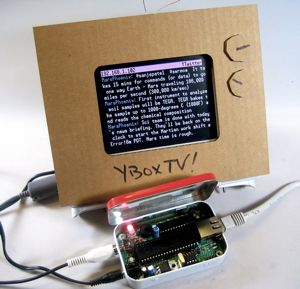 LadyAda, creator of a variety of cool DIY projects that have been featured in Make magazine, has a new kit that lets you make your own Internet set-top box out of an Altoid tin.
Description:
The YBox2 is a DIY networked set-top box. Connect it to your TV and you can design customized content to be delivered direct from the Internet.
This project is designed for people who want a new platform to experiment with. The video and Internet cores are ready to go and easy to work with. There are example widgets that demonstrate the YBox2’s capability, and the whole project is open source so you can start hacking your own.
Example widgets include weather and Twitter apps.
Don’t expect a movie store anytime soon, unless it offers ASCII graphic movies. If you’re interested in a net TV device that’s open and hackable, though, this could be a lot of fun.
The YBox2 kit (sans Altoid tin) is $75.
Read more »

